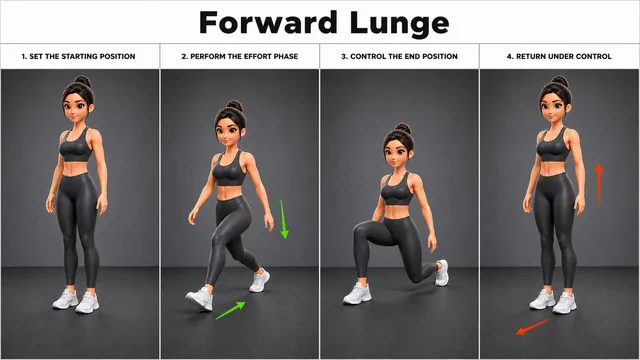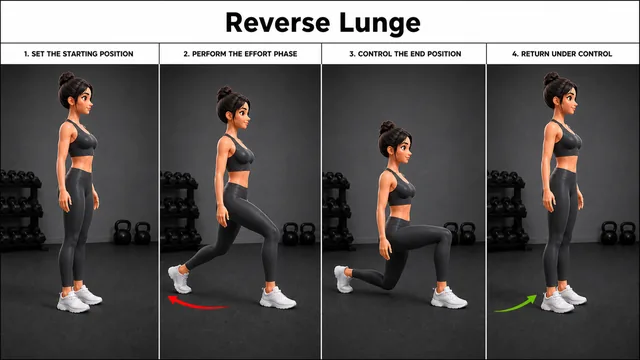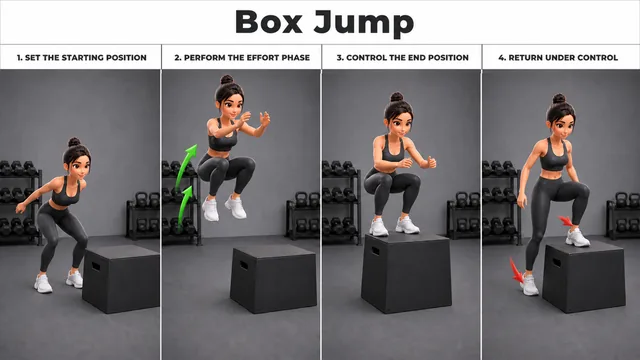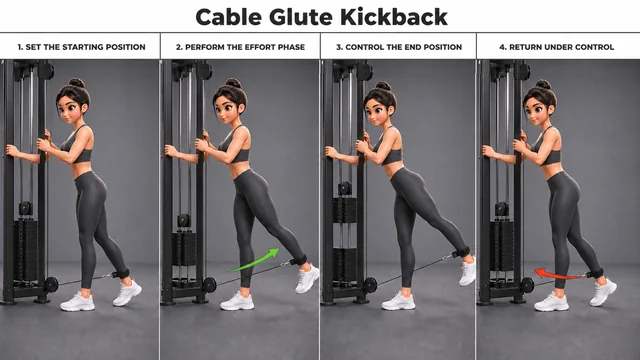

A strong Box Squat repetition begins before you move: the setup determines whether the right muscles can do their job. The exercise mainly trains glute maximus and vastus lateralis, while hamstrings, core, and glutes help support and control the movement. You will use a plyometric box while working from standing with a stable stance.
What makes a good Box Squat repetition?
Keep the pelvis steady and finish with the hips rather than borrowing motion from the lower back. The movement is approachable once the setup is familiar, but balance, load control, or multi-joint coordination make clean repetitions more demanding.
Muscles worked
Primary
Glute maximus and Vastus lateralis
These muscles should carry most of the intended work when the setup and movement path stay consistent.
Supporting
Hamstrings, Core, and Glutes
These muscles assist the movement or help keep the rest of your position steady.
Set up before you move
Start from standing with a stable stance. Use the prescribed grip: secure, exercise-appropriate grip. Check that a plyometric box is secure and adjusted before you begin.
Step-by-step tutorial
How to do Box Squat
- 1
Set the starting position
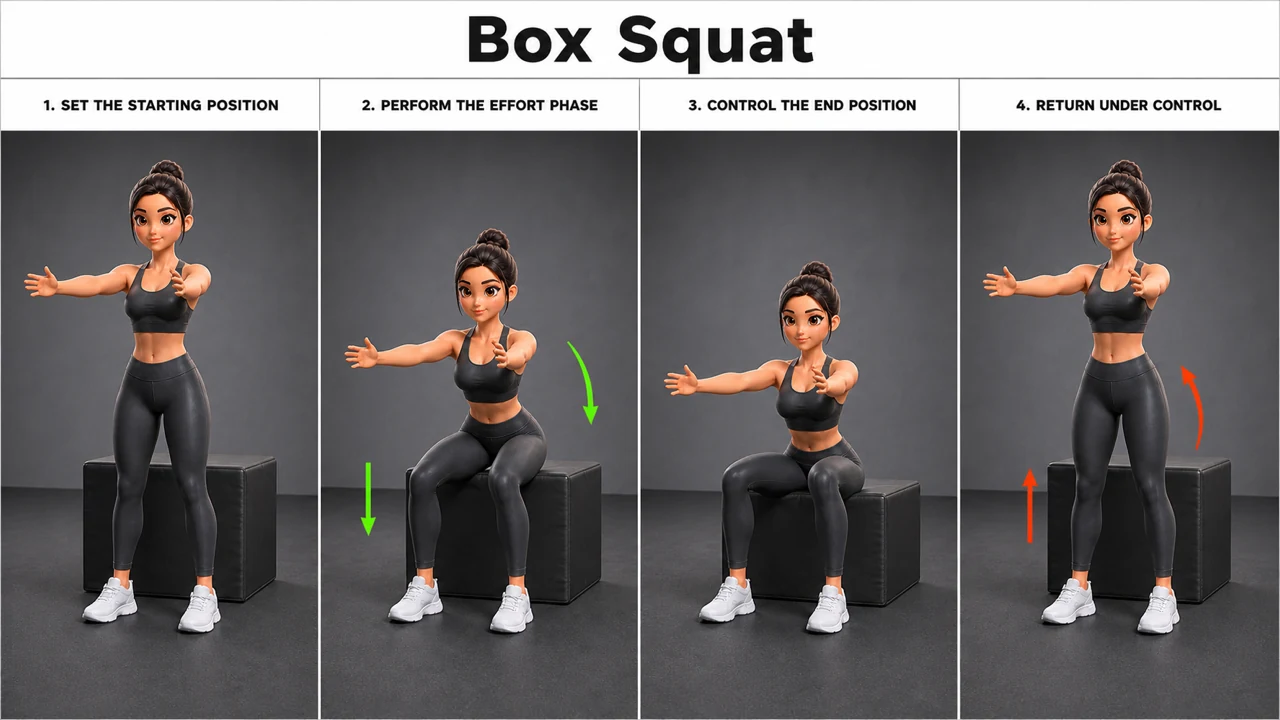
Set up for Box Squat with plyometric box, establish the required stance, brace the trunk, and align the knees with the toes.
Breathing: Breathe steadily; do not hold your breath.
- 2
Lower under control
Inhale and descend by bending the hips and knees under control, keeping the whole foot or working foot planted and the spine neutral.
Breathing: Inhale through the controlled return.
- 3
Control the end position
Reach the deepest controlled position with the knee tracking over the foot, the pelvis controlled, and the load balanced over the base of support.
Breathing: Breathe steadily; do not hold your breath.
- 4
Drive back to the finish
Exhale and press through the working foot to extend the hip and knee, returning to a balanced finish without the knee collapsing inward.
Breathing: Exhale through the effort.
Common mistakes to avoid
Starting before the setup is stable
Do not rush the first position. Set up for Box Squat with plyometric box, establish the required stance, brace the trunk, and align the knees with the toes. Make that setup feel repeatable before adding speed or resistance.
Letting the working position drift
Keep your standing with a stable stance setup consistent through the rep and maintain the secure, exercise-appropriate grip. If another part of the body has to swing or twist, reduce the load or range.
Rushing the return
The return is part of the exercise, not a pause between efforts. Inhale and descend by bending the hips and knees under control, keeping the whole foot or working foot planted and the spine neutral.
Forcing a range you cannot control
Use the Box Squat setup, maintain controlled joint alignment, and stop if the movement causes pain.
Sets, reps, and rest
A practical starting point is 3–4 sets of 6–10 controlled repetitions. Rest 90–180 seconds between challenging sets. Choose a load that leaves one or two technically clean repetitions in reserve while you learn the movement.
Treat this as a starting framework. Your load and volume should match your current technique, recovery, and training plan.
Box Squat questions
Is Box Squat suitable for beginners?
Box Squat is classified as an intermediate-level movement in this guide. The movement is approachable once the setup is familiar, but balance, load control, or multi-joint coordination make clean repetitions more demanding.
What muscles does Box Squat work?
Box Squat primarily works glute maximus and vastus lateralis, with hamstrings, core, and glutes assisting or stabilizing the movement.
What equipment do I need for Box Squat?
You need a plyometric box. Set everything up securely before the first repetition.